
RV CAMPING & ELECTRIC TRIKE GUIDE
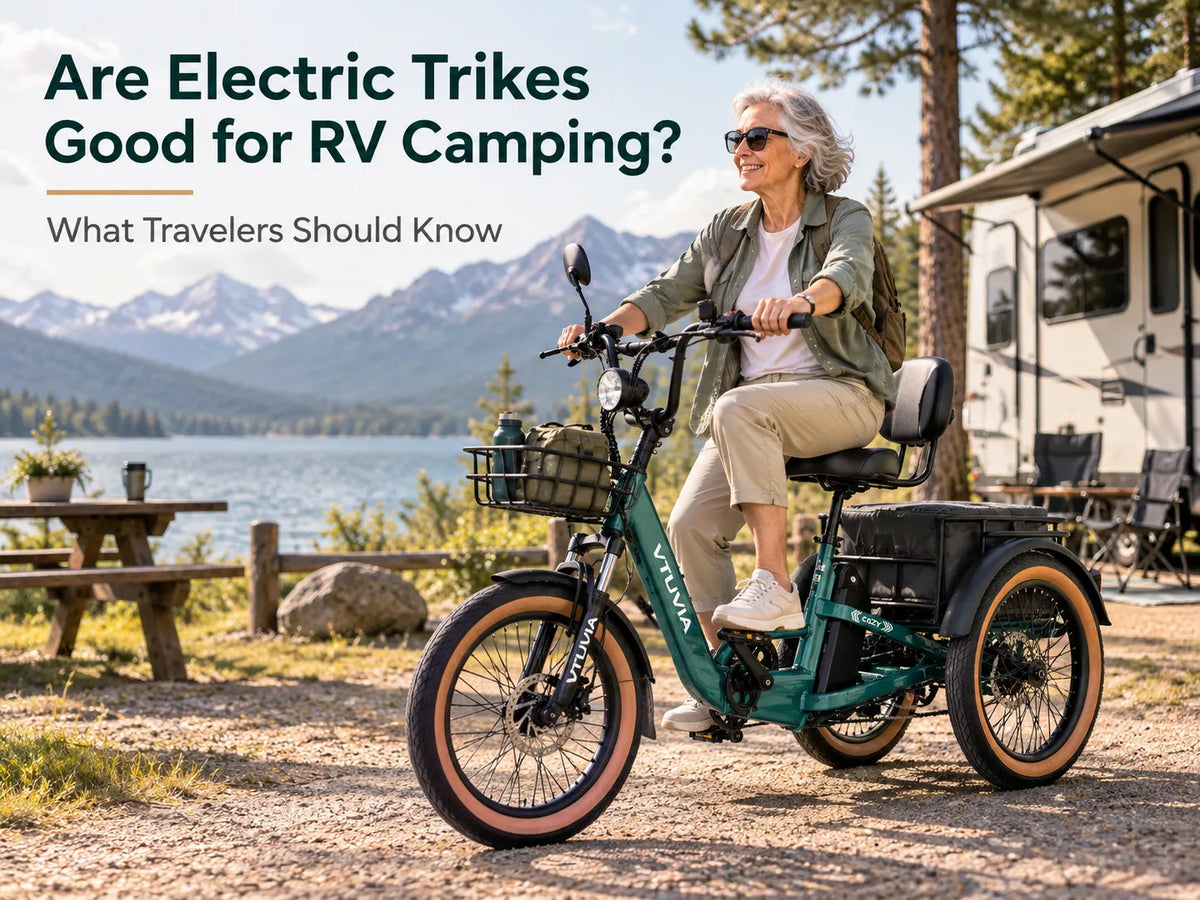
For many RV travelers, the campground is only the starting point. An electric trike can make short trips around the park, grocery runs, sightseeing, and everyday errands easier without moving the RV every time.

Yes. An electric trike can be a practical option for RV camping when you want a smaller vehicle for campground loops, nearby stores, short local trips, or relaxed sightseeing.
The most useful features for RV travel are usually folding size, easy mounting, comfortable seating, low-speed control, cargo space, range, and a realistic transport plan for getting the trike to and from the campground.
Why Do RV Travelers Use Electric Trikes?
The biggest advantage of RV travel is freedom. But once an RV is parked, using it for every short trip can be inconvenient.
That is where a smaller electric vehicle can be useful. An electric trike gives you a way to move around a campground or nearby area without relying on a full-size vehicle for every errand.
Short Campground Trips
Ride to the bathhouse, office, store, laundry area, or another campsite without moving the RV.
Local Errands
Use a cargo-capable trike for groceries, supplies, or a quick stop near the campground.
Relaxed Exploring
Neighborhood roads, paved paths, and local attractions can feel more accessible at trike speed.
Three-Wheel Support
Riders who do not want to balance a two-wheel bike at stops may prefer a three-wheel platform.
If you are new to electric trikes, start with our Complete Electric Trike Guide for a broader overview of comfort, safety, fit, and everyday use.
5 RV Camping Trips Where an Electric Trike Makes Sense
1. Camp Store Run
Pick up water, snacks, ice, or small supplies without starting the RV or walking across a large campground.
2. Bathhouse or Laundry Trip
Carry towels, clothes, or a small laundry load more easily than on foot.
3. Grocery Pickup
Ride to a nearby market for a small grocery run when the route and local rules allow it.
4. Campground Loop
Use a trike for relaxed evening rides, checking nearby sites, or visiting friends in the park.
5. Local Sightseeing
Explore nearby neighborhoods, parks, waterfront areas, or paved paths without relying on the RV for every outing.
Why Folding Size Matters More Than Many RV Travelers Expect

For RV use, the question is not simply whether an electric trike folds. The real question is whether the folded size works with your actual storage plan.
Before buying, measure the space you expect to use. Depending on your setup, that could be an RV storage bay, toy-hauler area, cargo space, trailer, vehicle rack, or another transport solution.
Measure first: compare the trike's folded length, width, and height with the opening and interior dimensions of your storage space—not just the total cargo volume.
A folding frame can make transport more practical, but folding does not automatically mean lightweight or easy to lift. Electric trikes are still larger and heavier than many bicycles.
How Should You Think About Transporting an Electric Trike With an RV?
Transport planning should happen before the first camping trip, not after the trike arrives.
| Question | Why It Matters |
|---|---|
| What are the folded dimensions? | Determines whether the trike fits through your storage opening and inside the available space. |
| How will you lift or roll it? | A folding frame can reduce size, but the full trike still has meaningful weight. |
| Will you remove the battery? | Battery removal may simplify charging and can reduce the weight you need to manage at one time. |
| Will the trike travel inside or outside? | Interior storage, trailers, cargo areas, and external carriers require different planning. |
| Is the carrier rated for the load? | Never assume a standard bicycle rack can safely carry an electric trike. |
Important: RV storage layouts, vehicle payload limits, hitch ratings, carrier ratings, and campground rules vary. Always verify your own RV and transport equipment before carrying an electric trike.
Why Comfort Matters Even More at a Campground
RV camping often means multiple short trips in one day rather than one long ride.
You may ride to the campground office, return to your site, head out again for groceries, and take another ride in the evening. That makes repeated mounting, stopping, and restarting especially important.
A low step-through electric trike can reduce how much leg lift is needed each time you get on and off.
A supportive seat, backrest, adjustable handlebar reach, and relaxed pedal position can also matter if your priority is comfort rather than sporty riding.
What About Hills, Gravel, and Uneven Campground Roads?
Not every campground is flat or smoothly paved. Some have short hills, packed gravel, uneven pavement, speed bumps, drainage areas, or narrow turns.
Before riding, look at the actual route rather than assuming every road inside a campground is suitable.
- Slow before turns. Three-wheel vehicles do not lean through corners like bicycles.
- Avoid steep side slopes. Side-to-side slope can affect stability.
- Watch for loose surfaces. Gravel, sand, wet leaves, and uneven ground can reduce traction.
- Manage downhill speed early. Good braking habits matter more than maximum motor power.
- Keep cargo balanced. Heavy items should stay low and centered when possible.
For more on three-wheel handling, read Are Electric Trikes Safe?.
How Much Cargo Do You Actually Need for RV Camping?
A large cargo rating sounds impressive, but the more useful question is what you actually plan to carry.
For many RV travelers, everyday cargo may include groceries, picnic items, a jacket, water, small camping supplies, or personal belongings.
A rear basket or cargo area can make these trips more practical, especially when the alternative is carrying everything by hand or returning to the RV for a vehicle.
Think in scenarios: “Can I carry two grocery bags, water, and a light jacket?” is often a more useful question than simply comparing maximum payload numbers.
What Should Older RV Travelers Look For?
For older adults, the best RV electric trike may not be the one with the biggest battery or highest top speed.
Look closely at the parts of the riding experience you will use every day:
- How high do you need to lift your leg to get on?
- Does the seat support you after 20 or 30 minutes?
- Can you adjust handlebar reach comfortably?
- Does pedal assist feel predictable at low speed?
- Can you back out of a tight campsite or garage area easily?
- Can you brake confidently with cargo onboard?
- Does the folded size work with your RV storage plan?
For a broader senior-focused comparison, see our Best Electric Trike for Seniors Guide.
How VTUVIA E-COZY Fits the RV Camping Use Case
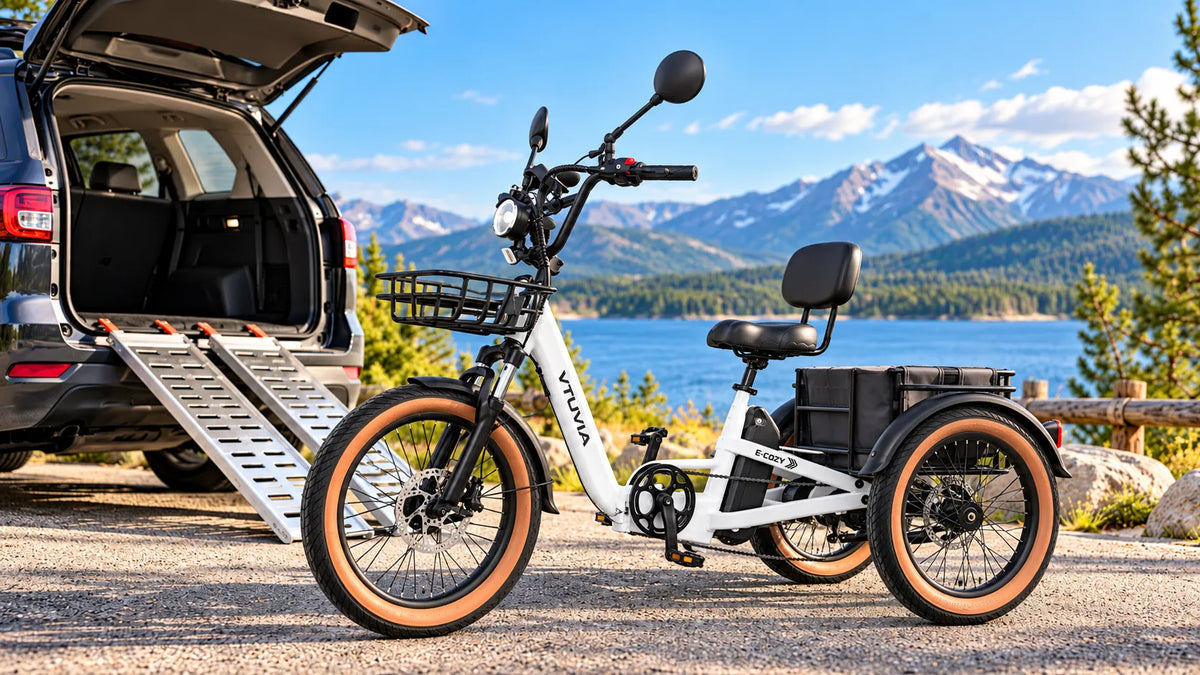
E-COZY is a folding electric trike designed around comfort, safety, stability, and everyday utility.
Folding Frame
Folded dimensions of approximately 41.3" × 26.8" × 34.3" can make storage planning easier than a non-folding full-size trike.
14.8" Ultra-Low Step-Through
Designed to reduce unnecessary leg lifting during repeated campground stops.
Rear Cargo Space
A practical rear cargo area supports groceries, supplies, and everyday campground errands.
Reverse Mode
Useful for low-speed backing and repositioning in tight parking or campsite areas.
ComfortFit™ Riding Position
Forward-positioned pedals, supportive seating, and adjustable fit focus on relaxed everyday riding.
Everyday Range
Up to 70 miles of pedal-assist range can support multiple local trips without making maximum range the entire point of the ride.
Try the Fit Before Your Next Trip
If you are considering an electric trike for RV travel, a test ride can help you evaluate step-through height, turning, seat comfort, braking, and low-speed control before planning storage and transport.
Find an E-COZY Test RideVTUVIA E-COZY Electric Trike
Folding three-wheel design for comfort-focused everyday riding.

A Real-Life RV Camping Day With an Electric Trike
Morning: Campground Errands
You ride from your campsite to the campground office, then stop by the camp store for a few small supplies.
Afternoon: Nearby Grocery Run
Instead of moving the RV for a short local trip, you use the trike for a small grocery run and carry the bags in the rear cargo area.
Evening: Relaxed Loop Around the Park
After dinner, you take a slower ride around the campground or nearby paved paths before returning to your site.
That is the real RV use case: not replacing every vehicle trip, but giving you a smaller, easier option for the short journeys that happen repeatedly during a camping stay.
Frequently Asked Questions
Are electric trikes good for RV camping?
Yes. They can be useful for campground transportation, nearby errands, grocery trips, and local exploring when the route, campground rules, and transport setup are appropriate.
Can a folding electric trike fit in an RV?
It depends on the trike's folded dimensions and your RV's storage opening and interior space. Always measure the actual storage area before buying.
Is a folding trike easy to lift into an RV?
Not necessarily. Folding reduces the trike's size, but electric trikes still have meaningful weight. Plan how you will roll, lift, or transport it before traveling.
What features matter most for RV travelers?
Folding size, easy mounting, comfortable seating, low-speed control, cargo space, braking, range, and a realistic transport plan are usually more useful than focusing only on maximum speed.
Are electric trikes good for older RV travelers?
They can be a practical option for older adults who want three-wheel support and easier short-distance transportation. Step-through height, rider fit, seat support, braking, and storage planning should all be evaluated before buying.
Can you ride an electric trike on campground roads?
That depends on the campground and local rules. Some parks may allow electric bicycles or trikes on certain roads or paths while others may restrict them, so check the rules for each destination.
How much range do you need for RV camping?
For many campers, practical range depends on the distance between the campsite, nearby stores, attractions, and local routes. Think about your typical daily trips rather than choosing a trike based only on the largest advertised range number.
Final Thoughts: Is an Electric Trike Worth Bringing on an RV Trip?
For the right traveler, yes.
An electric trike can give you a practical way to handle the short trips that happen after the RV is already parked: campground errands, grocery stops, visiting nearby sites, and relaxed local rides.
The best RV trike is not simply the one with the biggest motor or battery. It is the one that fits your body, your storage space, your transport setup, and the way you actually travel.
Before buying, measure your storage area, think through how the trike will be transported, and take a test ride if possible.
Then choose the features that will matter every day: easy access, comfort, predictable control, useful cargo space, and a folding size that works with your RV lifestyle.
Share:
How to Enjoy Farmers' Markets Without Driving
How Wide Is an Electric Trike? Dimensions, Doorways & Storage Guide