
Who Should Ride an Electric Trike? 10 Signs It May Be Right for You
Electric trikes are not only for older adults. They can be a practical choice for returning riders, people who want more stability, everyday errand riders, pet owners, and anyone looking for a comfortable way to stay active.

Quick Answer
An electric trike may be a good choice for riders who want greater low-speed stability, easier mounting, a relaxed riding position, and practical cargo capacity. It can be especially appealing to people returning to cycling, riders who feel less confident balancing on two wheels, adults who want gentle pedal-assisted exercise, and anyone who wants to replace short car trips with comfortable neighborhood rides.
A three-wheel design removes the need to balance at a complete stop, but electric trikes still require safe steering, braking, judgment, and practice—especially when turning.
Electric Trikes Are Not Only for Seniors
One of the most common misconceptions about electric trikes is that they are designed only for elderly riders. Older adults are an important part of the electric trike community, but age is not the only reason someone may prefer three wheels.
Many riders choose an electric trike because it better matches how they want to ride today. They may care less about aggressive speed and more about comfort, stability, cargo space, easy access, and the confidence to enjoy everyday trips.
Electric trikes are now used by returning cyclists, retirees, veterans, caregivers, grocery shoppers, pet owners, campground riders, larger riders, and people living in neighborhoods where many daily destinations are only a few miles away.
10 Signs an Electric Trike Might Be the Right Choice for You
You Have Not Ridden a Bike in Years
Getting back onto a traditional bicycle after 10, 20, or even 30 years can feel more intimidating than expected. Starting, stopping, and balancing at low speeds may no longer feel as natural as they once did.
An electric trike remains supported by three wheels when stationary, allowing returning riders to focus on steering, braking, and becoming comfortable again.
You Feel Less Confident Balancing on Two Wheels
A person does not need a diagnosed medical condition to feel less comfortable balancing a bicycle. Some riders simply notice that slow starts, narrow turns, uneven surfaces, or crowded parking lots make them uneasy.
A three-wheel platform can provide a more reassuring foundation, particularly when riding slowly or waiting at an intersection.
You Worry About Falling When Starting or Stopping
Starting from a traffic light, stopping on a slight incline, or placing a foot on the ground can be stressful for riders who no longer feel steady on a conventional bicycle.
Because an electric trike does not need to be balanced at a complete stop, the rider can remain seated and prepare to move again without repeatedly supporting the entire bike with one leg.
You Want to Stay Active Without Pushing Too Hard
Some people do not want a vehicle that does all the work. They still want to pedal, move their legs, spend time outdoors, and enjoy a sense of participation.
Pedal assist lets the rider choose how much support the motor provides. Lower assistance can support gentle exercise, while higher assistance can make hills, headwinds, and longer distances more manageable.
Getting On and Off a Traditional Bike Feels Difficult
Swinging a leg over a high top tube can be uncomfortable for riders with limited flexibility, reduced range of motion, or stiffness in the knees or hips.
A low step-through frame reduces the height the rider must lift a leg over, making the beginning and end of each ride feel more approachable.
You Regularly Carry Groceries or Everyday Cargo
Electric trikes can be useful for grocery trips, farmers markets, picnics, fishing gear, gardening supplies, and other short local errands.
Three wheels help keep the vehicle upright while loading or unloading bags. Front and rear cargo space can also distribute everyday items more conveniently than carrying them on the rider's back.
You Want to Rebuild Confidence After a Fall
A previous bicycle fall can affect confidence even after the physical injury has healed. Some riders begin avoiding stops, turns, uneven paths, or cycling altogether.
Moving to a stable three-wheel platform may help some riders feel comfortable returning to quiet paths and neighborhood routes. New riders should still practice turning and braking in an open area before entering traffic.
You Experience Occasional Balance Concerns
Some riders—including certain veterans living with the effects of past injuries or inner-ear conditions—may experience dizziness, vertigo, or reduced balance confidence.
A three-wheel platform does not require the same stationary balance as a two-wheel bicycle. However, it does not make riding automatically safe for someone experiencing dizziness or disorientation.
You Want to Replace Short Car Trips
Trips to a nearby store, community center, local park, friend's home, or neighborhood café may not require a car.
An electric trike can turn these short errands into enjoyable outdoor rides while providing motor assistance and room for everyday items.
You Simply Want to Enjoy Riding Again
Not every rider is looking for maximum speed, technical trails, or intense performance. Many people want fresh air, gentle movement, independence, and a comfortable way to explore their community.
For these riders, an electric trike can be less about riding faster and more about riding more often.
Which Rider Sounds Most Like You?
Sometimes lifestyle is a better guide than age. These common rider profiles can help you decide whether an electric trike fits the way you expect to use it.
The Returning Rider
“I loved riding years ago, but a two-wheel bike no longer feels as comfortable or familiar.”
The Neighborhood Explorer
“I want a comfortable way to ride around my community, visit friends, and enjoy nearby parks.”
The Grocery Runner
“Many of my errands are close to home, and I want enough cargo space to carry bags without using the car.”
The Confidence Seeker
“I still want to ride, but starting, stopping, and balancing on two wheels make me nervous.”
The Active Retiree
“I want regular outdoor activity, but I also want motor assistance when a ride becomes tiring.”
The Pet Companion
“I want to enjoy easy local outings and carry appropriate pet supplies or a properly secured small pet.”
The Veteran Returning to Riding
“A past injury or balance concern changed how confident I feel on a traditional bicycle, but I still miss riding.”
The Comfort-First Rider
“I value a supportive seat, relaxed posture, smooth assistance, and easy access more than aggressive performance.”
The Everyday Independence Rider
“I want more freedom to complete short local trips without depending on someone else to drive.”
Is an Electric Trike Right for Everyone?
Not necessarily. An electric trike is designed for a different riding experience than a conventional bicycle or performance-oriented e-bike.
You may prefer a two-wheel bicycle or e-bike if you primarily want:
- Fast road cycling and sharp, athletic handling
- A narrow vehicle for tight bike lanes or limited storage areas
- A lightweight bike that is easy to carry upstairs
- Aggressive mountain biking or technical off-road riding
- The ability to lean naturally into faster turns
Electric trikes are wider and heavier than most bicycles. They also steer through turns rather than leaning like a two-wheel bike. New riders need time to adjust, especially when judging rear-wheel width and slowing down before corners.
Why Many Riders Choose the VTUVIA E-Cozy
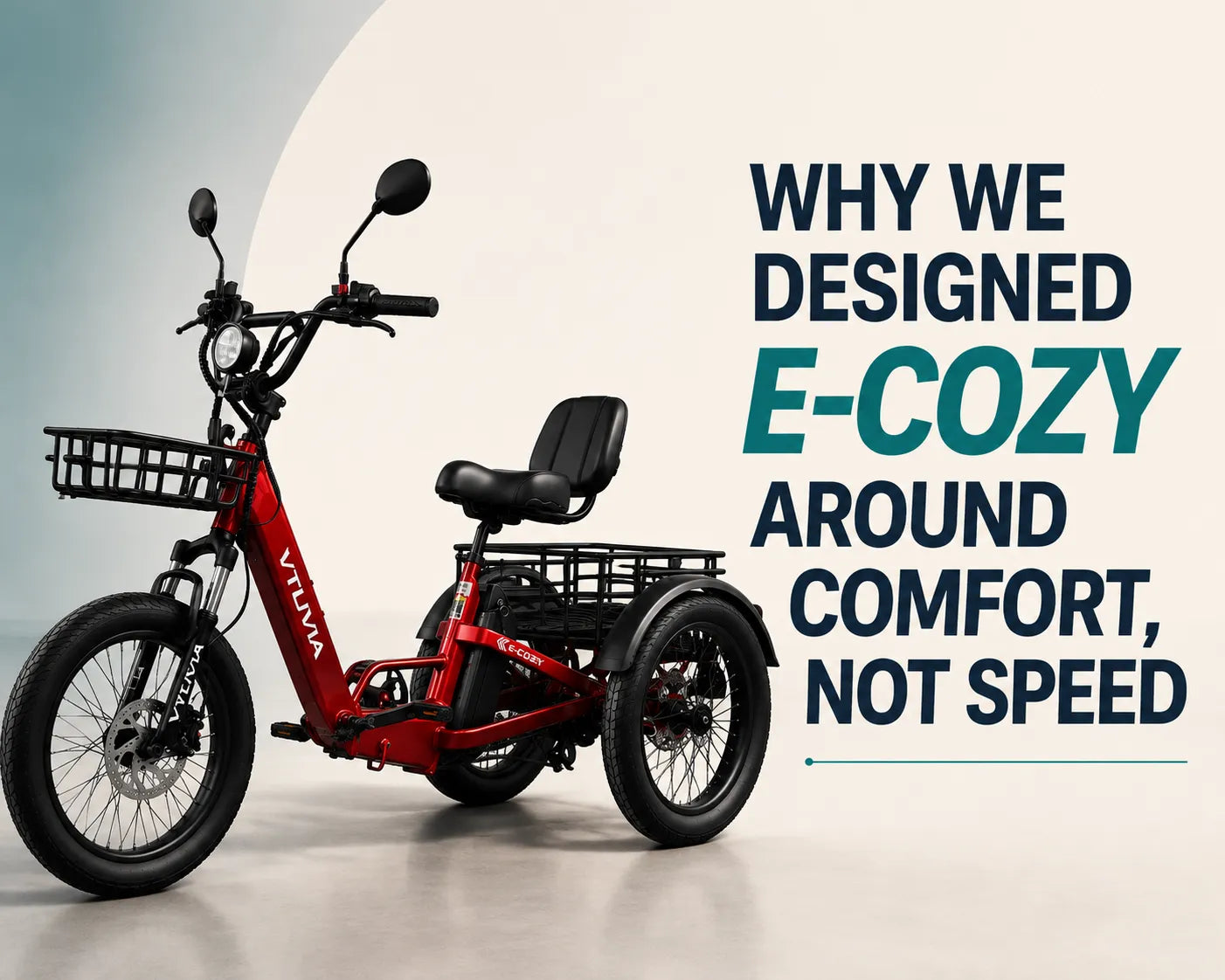
The VTUVIA E-Cozy was created around a straightforward goal: helping more people enjoy everyday riding with greater comfort, control, and confidence.
Instead of treating motor power or top speed as the only priorities, the E-Cozy combines easy access, a supportive seating position, smooth pedal assistance, controlled turning, practical cargo capacity, and everyday safety functions in one three-wheel platform.
This combination can be especially valuable for returning riders, adults who no longer enjoy balancing a traditional bicycle, and people who want a practical alternative for neighborhood rides, grocery trips, farmers markets, parks, and visits with friends.

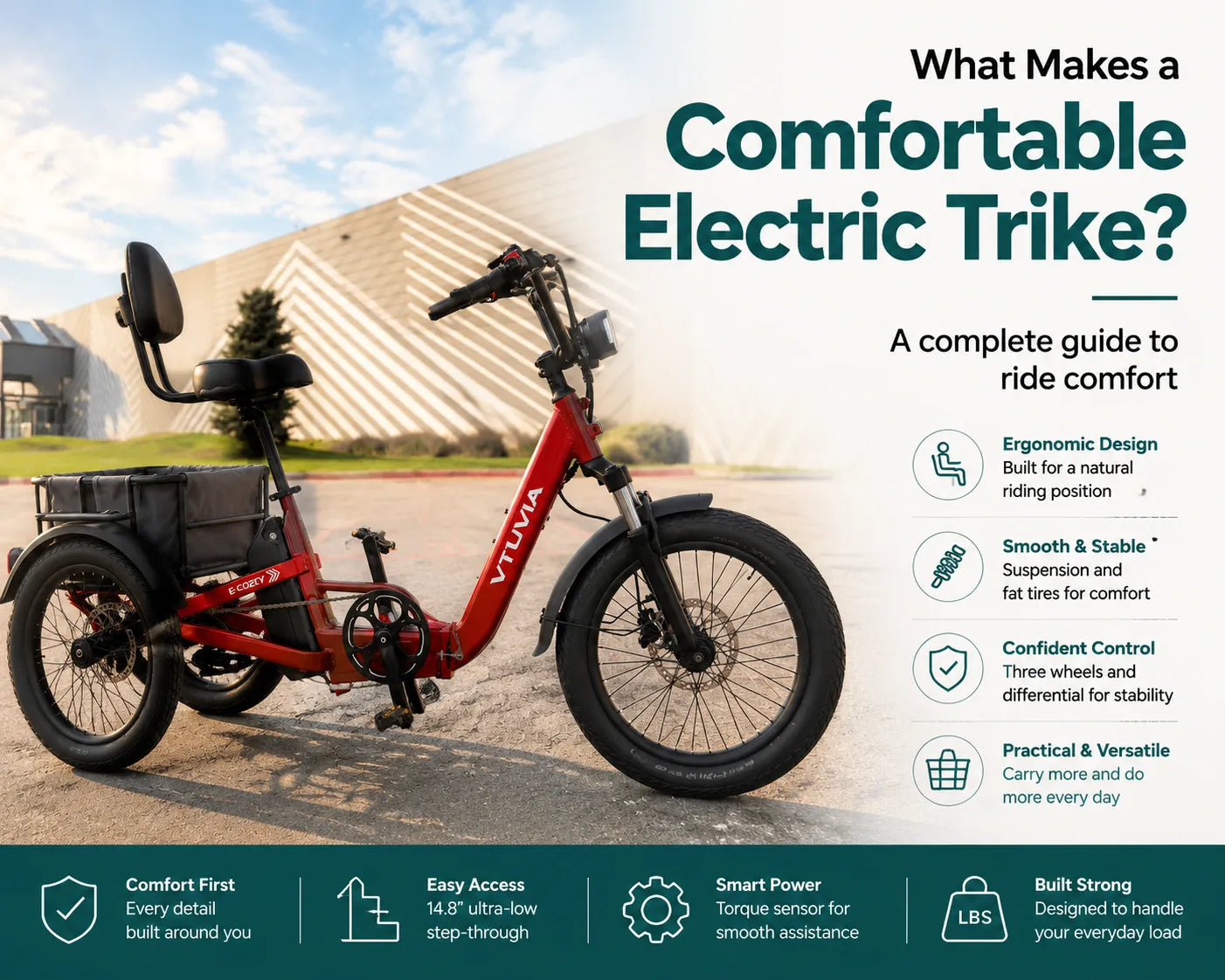
14.8-Inch Ultra-Low Step-Through
The low entry point reduces how high the rider must lift a leg when getting on or off. This can make mounting feel more approachable for people with reduced flexibility, stiffness, or less confidence around taller bicycle frames.
Supportive Seat and Adjustable Backrest
A wide seat and adjustable backrest provide more support than a traditional narrow bicycle saddle. Riders can adjust the setup to create a more relaxed position for neighborhood trips and longer recreational rides.
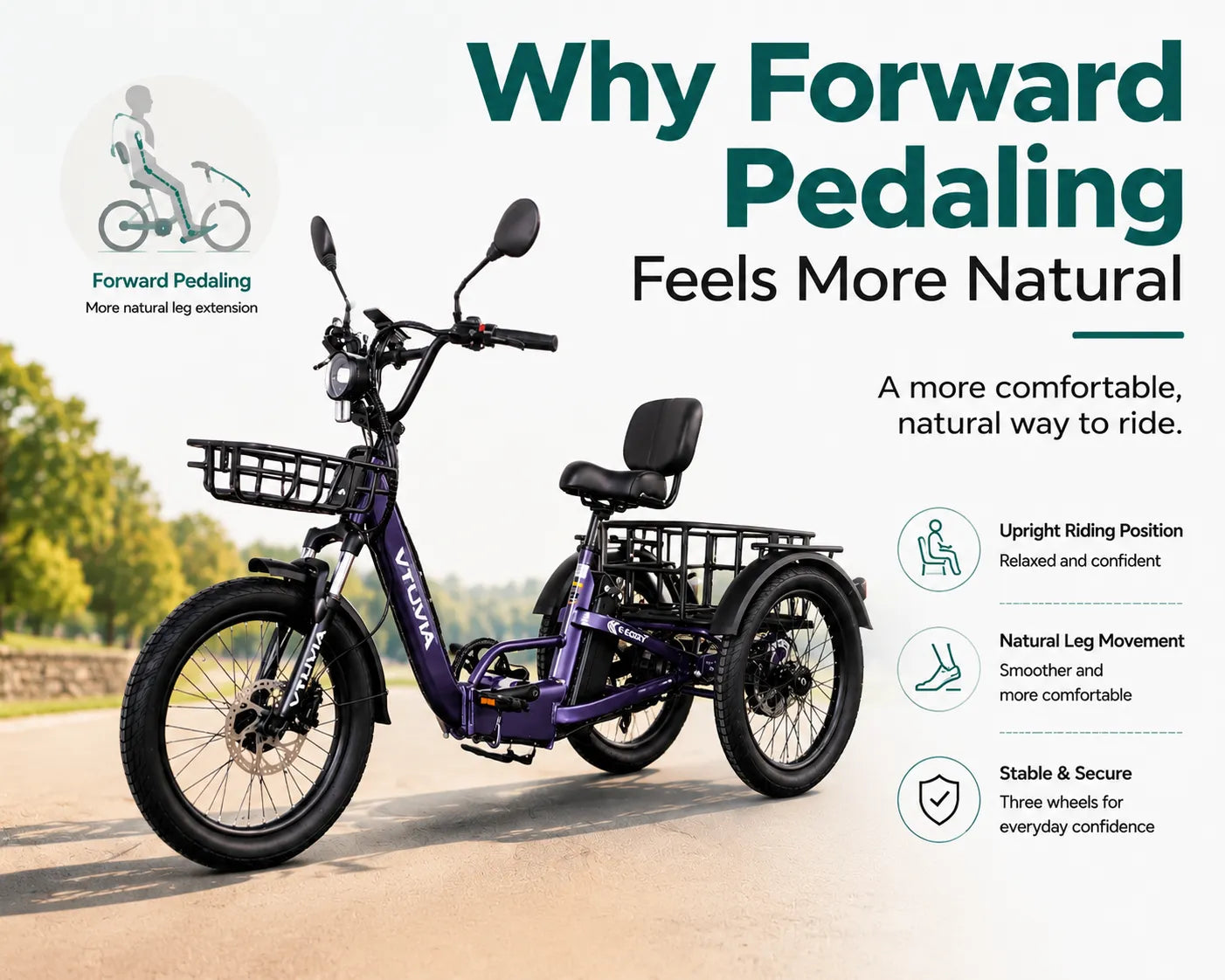
Forward Pedaling Geometry
The E-Cozy places the rider in a relaxed, slightly reclined position instead of forcing the upper body far forward over the handlebars. This design helps create a comfortable posture while keeping the controls within easy reach.
Torque-Sensing Pedal Assist
The torque sensor responds to how firmly the rider pedals and adjusts motor support accordingly. This creates a smoother, more intuitive feeling than an abrupt surge of power, helping starts and changes in speed feel easier to control.
750W Motor and Up to 85 Nm of Torque
The rear motor provides assistance for everyday riding, gradual hills, cargo, and longer routes. The focus is not simply on speed, but on delivering usable support when the rider needs help starting, climbing, or maintaining momentum.
Rear Differential
During a turn, the inside and outside rear wheels need to travel different distances. The rear differential allows them to rotate at different speeds, helping the trike corner more smoothly and reducing tire scrubbing during normal turns.
Hydraulic Disc Brakes
Hydraulic disc brakes provide responsive braking with less hand effort than many basic mechanical systems. The front and rear braking setup helps riders manage speed and stop with greater control during normal daily use.
Parking Brake
The parking brake helps keep the trike from rolling while the rider is getting on, getting off, or loading the cargo baskets. This is especially useful on driveways, parking areas, and gently sloped surfaces.
Reverse Mode
Reverse assistance can make it easier to move out of garages, parking spaces, narrow paths, or areas where turning the entire trike around would be inconvenient.
Front Suspension and 20 × 3.0-Inch Tires
The suspension fork and wide tires help soften common bumps, pavement seams, and rough patches found on neighborhood streets and multi-use paths. They are designed for comfort and control rather than technical trail riding.
Front and Rear Cargo Capacity
Dedicated cargo space makes the E-Cozy practical for groceries, farmers-market purchases, picnic supplies, personal belongings, and other everyday items. Riders should always secure cargo and remain within the stated load limits.
Up to 70 Miles of Pedal-Assist Range
With a 48V 15Ah battery, the E-Cozy is designed to support more than quick trips around the block. Actual range varies with assist level, rider and cargo weight, terrain, wind, temperature, tire pressure, and riding habits.
Who Is the E-Cozy Designed For?
- Adults returning to cycling after years away
- Riders who want support at stops and low speeds
- People who prefer a low and open frame
- Comfort-first neighborhood riders
- Retirees seeking gentle outdoor activity
- Grocery and farmers-market riders
- People carrying practical everyday cargo
- Riders who appreciate reverse and parking functions
- Adults looking for a relaxed seating position
- People who want to continue riding with confidence
Electric Trike, E-Bike, or Mobility Scooter?
These options can all support local mobility, but they serve different rider needs.
| Option | May Be Better For | Important Considerations |
|---|---|---|
| Electric Trike | Riders who want to pedal, carry cargo, remain supported at stops, and enjoy comfortable everyday riding. | Wider and heavier than a bicycle. Requires slower turns and awareness of rear-wheel width. |
| Two-Wheel E-Bike | Riders who are comfortable balancing and want narrower handling, lighter weight, or a more traditional cycling feel. | Requires balance when starting, stopping, and riding slowly. |
| Mobility Scooter | People who primarily need seated, motorized transportation and do not intend to pedal. | Provides a different activity level and riding experience from a pedal-equipped electric trike. |
Frequently Asked Questions
Are electric trikes only for seniors?
No. Electric trikes are used by riders of different ages who value stability, comfort, cargo capacity, and convenient local transportation. Older adults are an important audience, but they are not the only people who can benefit from a three-wheel design.
Are electric trikes good for beginners?
Many beginners appreciate not having to balance the trike at a complete stop. However, trikes handle differently from bicycles. Beginners should practice starting, braking, wide turns, and judging rear-wheel width in an open, traffic-free area.
Can someone with vertigo ride an electric trike?
A three-wheel platform may reduce the stationary balance required compared with a two-wheel bicycle, but vertigo can still affect orientation, vision, judgment, and vehicle control. Anyone with vertigo or recurring dizziness should consult a healthcare professional before riding and should never operate a trike while symptoms are present.
Are electric trikes suitable for veterans with balance concerns?
Some veterans affected by previous injuries or balance-related conditions may prefer the supported feel of three wheels. Suitability depends on the individual, the severity of symptoms, reaction time, strength, vision, and ability to control the trike. A professional medical assessment and a supervised test ride may be appropriate.
Are electric trikes good for people with knee discomfort?
Some riders appreciate pedal assistance, adjustable seating, and a low step-through frame because these features may reduce certain physical demands. An electric trike is not a treatment for knee pain. Riders with ongoing pain or a diagnosed condition should seek medical guidance before riding.
Can larger adults ride an electric trike?
Many electric trikes are designed with higher payload capacities than conventional bicycles, but riders must check the manufacturer's total payload limit. This limit normally includes the rider, cargo, accessories, and anything carried in the baskets.
Do you have to pedal an electric trike?
It depends on the model and riding mode. Pedal assist supports the rider while pedaling, while some electric trikes also include a throttle. Local rules may affect where and how throttle-equipped electric trikes can be used.
Is an electric trike easier to ride than an e-bike?
An electric trike can feel easier when starting, stopping, and riding slowly because it does not need to be balanced at a standstill. An e-bike may feel more natural during faster turns because it leans like a traditional bicycle. The better choice depends on the rider's balance, confidence, route, storage needs, and preferred handling.
How can I tell whether an electric trike is right for me?
Consider whether you value low-speed support, easy mounting, a comfortable seat, pedal assistance, and cargo space more than light weight or athletic handling. A test ride in a safe area is one of the best ways to understand how a trike feels.
The Right Trike Should Help You Ride More Often
The best electric trike is not simply the one with the biggest motor, longest specification list, or highest top speed. It is the one that fits your body, your confidence level, your routes, and the way you want to use it.
For some riders, that means returning to cycling after many years. For others, it means carrying groceries, visiting friends, enjoying a quiet park, or replacing a short drive with time outdoors.
If three wheels, easier access, a supportive seat, and smooth electric assistance would make you more likely to ride, an electric trike may be worth considering.
Explore the VTUVIA E-Cozy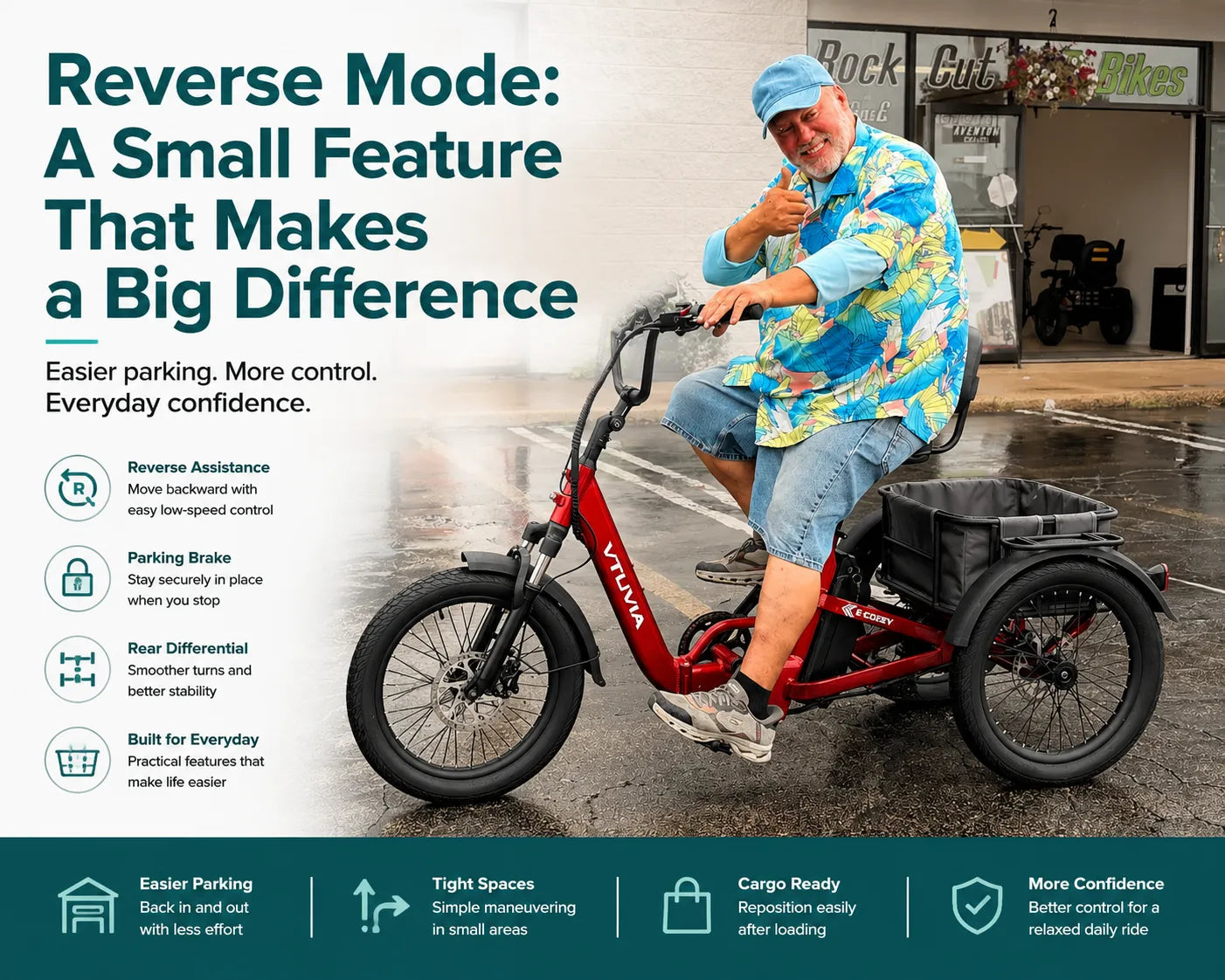
Share:
Are Electric Trikes Safe? What Every First-Time Rider Should Know
Why Step-Through Electric Trikes Are Easier to Ride