
Quick Answer: What is the best electric trike for bad knees?
The best electric trike for bad knees is one that features a low step-through frame for easy mounting, a forward-pedal design to reduce joint flexion, and a torque-sensing motor (like the V-Adapt system) for smooth acceleration. These features minimize the mechanical stress on your patella and ligaments, allowing for a knee-free riding experience that traditional bikes cannot offer.
Why Traditional Bikes Hurt Your Knees
Traditional bicycles, and even some standard e-bikes, are often designed for efficiency and speed rather than joint longevity. Here’s why they fail riders with chronic pain:
-
The "Climb" to Mount: High-top tubes require you to lift your leg significantly, putting lateral stress on the knee.
-
Vertical Pedal Alignment: On most bikes, the pedals are directly beneath the seat. This forces the knee to bend at an acute angle (often past 90 degrees) to initiate a stroke, which maximizes pressure on the knee cap.
-
Jerky Power Delivery: Basic e-bikes use "cadence sensors" that kick in with a sudden jolt. For someone with bad knees, this sudden force can cause micro-trauma to the joint.
-
Balancing Stress: The constant need to put your feet down to balance at stoplights creates repetitive impact stress on the knees.
Electric Trike vs. Traditional Bike for Bad Knees
Not all cycles are created equal. If you are struggling with knee pain, here is how a specialized trike compares to a standard bike:
| Feature | Traditional Bike | Electric Trike (Vtuvia Design) |
|---|---|---|
| Knee Angle | Deep bending creates high joint stress. | Forward pedals allow a knee-free, shallow stroke. |
| Mounting | High frames require lifting/twisting. | Low step-through allows you to walk right in. |
| Power Delivery | 100% leg-dependent or jerky motor. | V-Adapt torque system for smooth assist. |
| Stability | Requires balancing and "bracing" feet. | Anti-tip stability; no balancing required. |
What Makes the Best Electric Trike for Bad Knees?
When searching for an electric trike for seniors with knee pain, you must look for specific ergonomic "green flags":
1. Low Step-Through & Easy-Entry Frame
Our easy-entry frame removes the barrier to entry—literally. You don't have to lift your leg more than a few inches, preventing the twisting motions that flare up knee inflammation.
2. Forward Pedal Design: The Ergonomic Game Changer
By moving the pedals forward of the seat post, we reduce the amount of knee flexion required to complete a rotation. This "knee-free" geometry allows you to get full leg extension without the painful "deep bend" at the top of the stroke.
3. V-Adapt Torque System: Smooth Power, No Jolts
A jerky motor can cause micro-trauma to a sensitive knee. Our V-adapt torque system provides power that matches your natural rhythm. It’s an easy pedal electric bike experience that feels like a gentle breeze pushing you, not a sudden yank on your joints.
4. Integrated Reverse Function
Backing up a heavy trike manually is a recipe for knee strain. Our reverse-with-ease function means you never have to "shuffle" backward using your legs. The motor handles the heavy lifting.
Why Smooth Power Matters: The V-Adapt Torque System
The "jolt" of a motor is the enemy of a sensitive knee. Most riders looking for a bike for knee pain don't realize that the type of power delivery is more important than the amount of power.
The V-Adapt Advantage
Our proprietary V-Adapt Torque System measures exactly how much pressure you are putting on the pedals.
-
Cadence Sensor (Standard): Detects that you are pedaling and gives you 100% power immediately. (Bad for knees).
-
V-Adapt Torque System: Detects how hard you are pedaling and provides a proportional, smooth assist.
-
Result: The transition from standing still to moving is buttery smooth. It feels like you have "super-powered legs" rather than a motor pulling you, which eliminates the jarring forces that cause knee inflammation.
Stability and Fit: Why Size and Weight Count
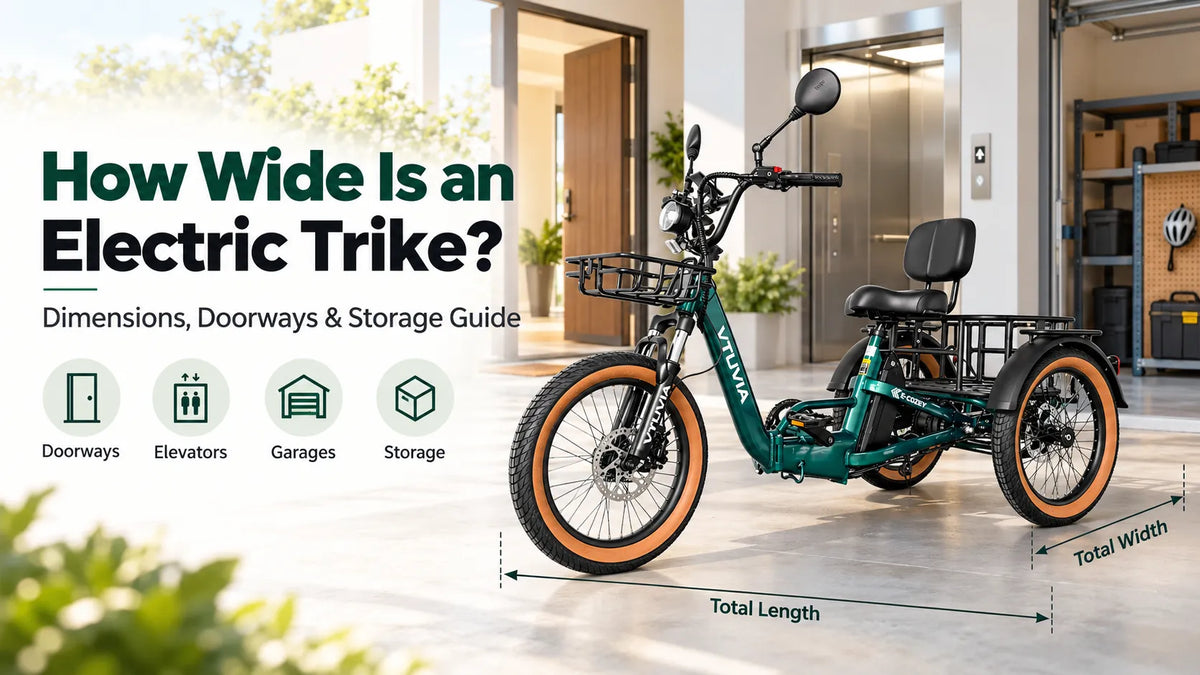
A trike that is too heavy or too bulky can become a burden, leading to accidental strain during storage or parking.
-
Ultra-Lightweight & Medium Size: We’ve optimized our frame to be compact yet spacious. It provides the legroom needed for tall riders while remaining ultra-lightweight for better handling.
-
Super Balance & Anti-Tip: Safety is paramount. Our trikes are engineered with a low center of gravity to ensure anti-tip stability. You don't have to worry about leaning or balancing, which removes the "bracing" stress riders often feel in their knees and hips.
-
Secure Parking Brake: "Whether you're stopping for coffee or a chat, our parking lock ensures you stay grounded and secure." You can get on and off the trike with the brake engaged, providing a stable platform that won't roll away while you're transitioning.
FAQ: Electric Trikes and Knee Pain
Is an electric trike easier on knees than a regular bike?
Absolutely. Between the motor assistance and the ergonomic seating position, an electric trike is easy on knees and reduces the load on your joints by up to 80% compared to a traditional bike.
How do I mount a trike if I have limited mobility?
Look for a low step-through electric trike. These frames allow you to step through the center of the bike rather than swinging your leg over the back.
Can I ride an e-trike if I’ve had a knee replacement?
Many of our riders are post-surgery. However, always consult with your physical therapist. The smooth torque system and forward-pedal design are specifically favored by those in recovery.
Ready to Ride Without the Pain?
Imagine riding again without that sharp knee pain holding you back. No strain, no hesitation—just smooth, comfortable movement. That’s what the right electric trike can give you.
Be the first to experience the best electric trike with reverse and knee-friendly ergonomics.
JOIN OUR EARLY ACCESS LIST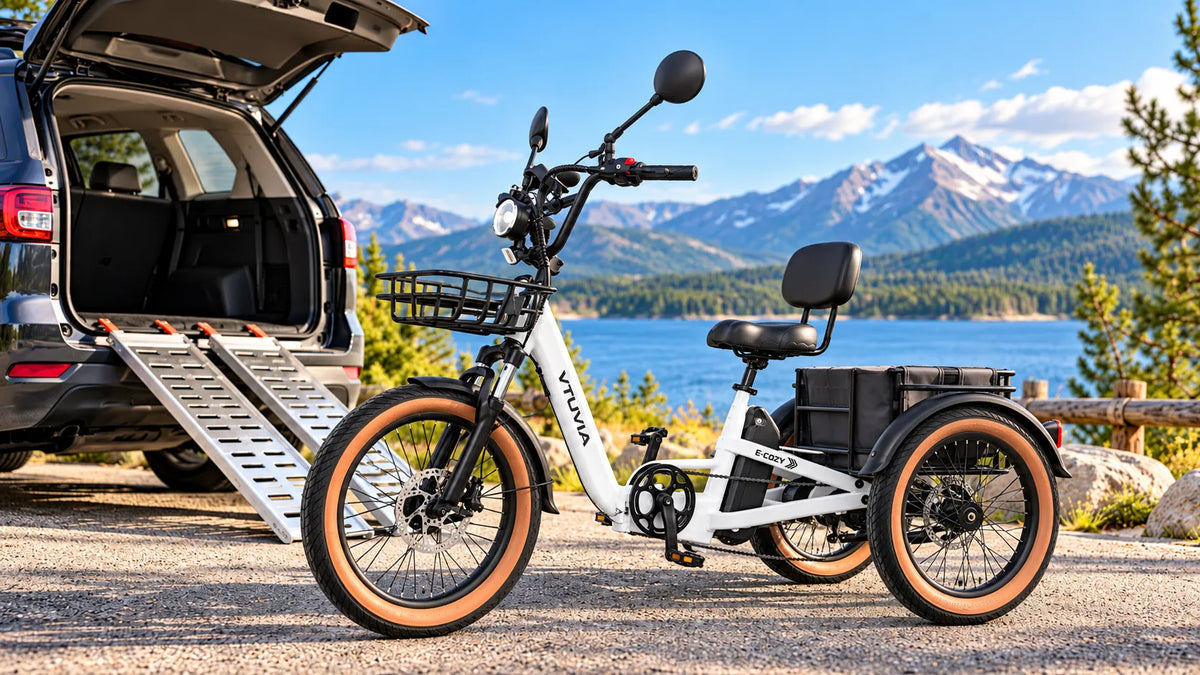

Share:
Do You Need Reverse on an Electric Trike?
Best Commuter Electric Bike 2026: Save $8,000 & Replace Your Car with Vtuvia